Accessibility Tools
Skip to main content
Perfil investigador
Esp
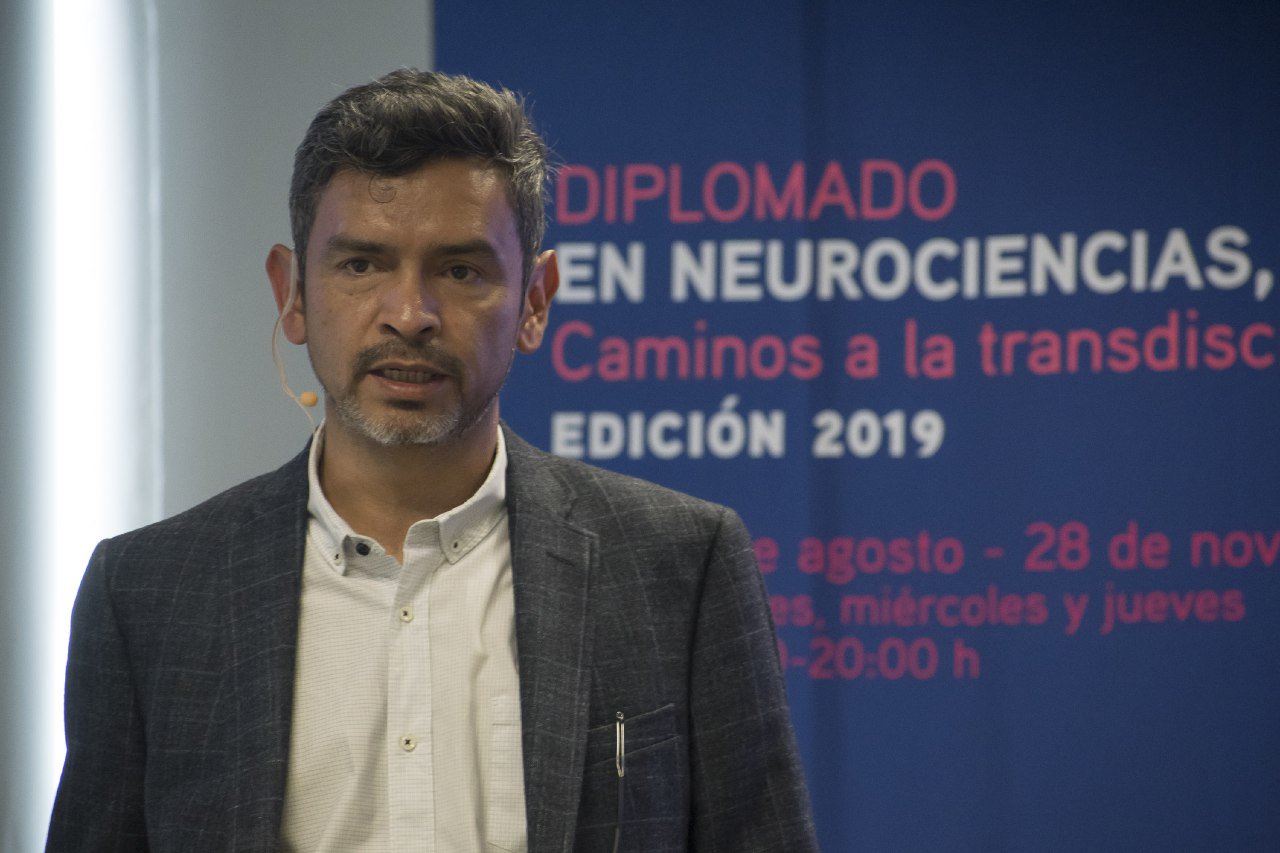
Dr. Carlos César Contreras Ibáñez

Associate Professor
Departament of Sociology

Division of Social Sciences and Humanities


Level 1
Member of the National System of Researchers
(SNII)

Behavioral Sciences and Education


Iztapalapa Campus

Return to list
New search


Sites of interest

• Personal Web Site

Sustainable Development Goals

• 3 Good Health and Well-being

• 4 Quality Education

• 8 Decent Work and Economic Growth

• 10 Reduced Inequality

• 11 Sustainable Cities and Communities

• 16 Peace, Justice and Strong Institutions


Research interests

• Community wellness & Mental health
• Social psychological processes: Culture, cognition & social change
• Inter-group relations, conflict, cooperation & identity
• Collective action, civic participation, social movements
• Quantitative methods in Social Sciences: Social networks analysis, Surveys, Social experimentation, Evaluation, Computerized social simulation

Profile

Professor Carlos C. Contreras-Ibáñez, is a researcher in Social Psychology, associated with the Department of Sociology at the Universidad Autónoma Metropolitana (UAM) Iztapalapa Campus since 1997.

After completing his undergraduate studies at UAM Iztapalapa Campus (Social Psychology, 1993), he studied for a Master's degree at UAM and Ludwig-Maximilian University in Munich (History and Philosophy of Science, 2000) and obtained his Ph.D. degree from the Faculty of Psychology of the Universidad Nacional Autónoma de México (UNAM) (Social Psychology, 2009), with the dissertation "Evolution of Intergroup Cooperation: Structural, Cultural and Social Cognitive Mechanisms".
His research interests fall into three major related categories: 1. Psychosocial processes: Culture, cognition, and social change, 2. Intergroup relations, conflict, cooperation, and identity, and 3. Theory, methods, and intervention for social change in health/wellbeing, community participation, and collective action.

He has published six books, 45 book chapters, and refereed articles and has presented more than 140 oral communications at national and international conferences. He has directed more than 80 theses (undergraduate and graduate). He has taught more than 130 courses in 4 national and two international universities, generally in three areas: socio-cognitive principles, psychosocial theories, and quantitative methods in social sciences. In addition to his regular teaching load in Social Psychology in recent years, he previously taught courses in Social Network Analysis, a Master's course in Intercultural Conflict at the Alice Salomon Hochschule (ASU) in Berlin, as Master's and Ph.D. courses in Economics at the UAM Xochimilco Campus, and as a mixed methods course in the Master's and Ph.D. Program at the Centro de Estudios Sociológicos del Colegio de México.

He has participated as a guest speaker in different academic events, some requested and financed by the Mexican Academy of Science and others by the receiving institutions. He has been a member of various national and inter-American scientific societies in psychology and social psychology, the International Network for Social Network Analysis, and the Society for Social Neuroscience. He has directed or participated in 17 research and evaluation projects funded nationally or internationally. He has managed the visit or stay of colleagues, including two postdoctoral fellows, and organized international academic events.

He coordinated the Divisional Laboratory of Social Cognition at UAM Iztapalapa Campus. He has participated in several editorial committees and peer review committees of proposals for universities and institutional committees. He is a member of editorial boards of national and international journals and magazines in his field. His laboratory has received two postdoctoral collaborators.

In the context of the COVID-19 pandemic, he is executing with an interdisciplinary group the action-research project "Well-being and health in university communities: epidemiology and social intervention", for which workshops, biomedical and psychometric instruments, and materials were developed under a systematic and complex design. This project is not only unique in its kind in Mexico, but it also puts relational wellbeing, and not only physical health, at the forefront of systematic intervention, and thus this group will establish recommendations for the safe return to university facilities of the community as a whole.


Information provided by the academic staff
Research interests

• Community wellness & Mental health
• Social psychological processes: Culture, cognition & social change
• Inter-group relations, conflict, cooperation & identity
• Collective action, civic participation, social movements
• Quantitative methods in Social Sciences: Social networks analysis, Surveys, Social experimentation, Evaluation, Computerized social simulation

Academic Work

On the following pages you can consult the research work:


Other sites of interest

Consult the research work on other websites:


Some examples of publications

Select the bibliographic reference to consult each publication:


Open Access References UN SDGs
OABlock, K., He, J.Y., Olsson, M.I.T. and 134 more (...) (2026).‘Free to Be Me?’: Gender Role Norms Constrain Career Interests Less for Lesbian, Gay and Bisexual People Than for Heterosexual People. European Journal of Social Psychology,| 5 |
OABlock, K., Olsson, M.I.T., van Grootel, S. and 135 more (...) (2026).The gender gap in the care economy is larger in highly developed countries: Sociocultural explanations for paradoxical findings. The American psychologist,81(2) 221-237| 4 | 5 | 8 | 10 |
OASchindler, S., Schuster, C., Olsson, M.I.T. and 139 more (...) (2025).Policy as normative influence? On the relationship between parental leave policy and social norms in gender division of childcare across 48 countries. British Journal of Social Psychology,64(2) | 5 | 10 |
OAZamora-Lugo, S., Reynoso-Alcántara, V., Sanchez-Lopez, J. and 21 more (...) (2025).Assessing executive functioning in higher education: development and structural validation of a new self-report scale. Frontiers in Psychology,16
OAZainal, N.H., Benjet, C., Albor, Y. and 20 more (...) (2025).Statistical methods to adjust for the effects on intervention compliance in randomized clinical trials where precision treatment rules are being developed. International Journal of Methods in Psychiatric Research,34(1)
OABenjet, C., Zainal, N.H., Albor, Y. and 20 more (...) (2025).The Effect of Predicted Compliance With a Web-Based Intervention for Anxiety and Depression Among Latin American University Students: Randomized Controlled Trial. JMIR Mental Health,12
OAAndersson, P.A., Vartanova, I., Västfjäll, D. and 91 more (...) (2024).Anger and disgust shape judgments of social sanctions across cultures, especially in high individual autonomy societies. Scientific Reports,14(1)
OABenjet, C., Kessler, R.C., Kazdin, A.E. and 14 more (...) (2024).Correction: Study protocol for pragmatic trials of Internet-delivered guided and unguided cognitive behavior therapy for treating depression and anxiety in university students of two Latin American countries: the Yo Puedo Sentirme Bien study(, (2022), 23, (450), 10.1186/s13063-022-06255-3). Trials,25(1)
OADelgado-Juárez, G.C., Bernal-Silva, S., Méndez-González, K.J. and 2 more (...) (2024).Impact of the Covid-19 pandemic on the epidemiological weekly report surveillance system of Mexico. Salud Publica de Mexico,66(6) 831-841
OAOlsson, M.I.T., van Grootel, S., Block, K. and 134 more (...) (2023).Gender Gap in Parental Leave Intentions: Evidence from 37 Countries. Political Psychology,44(6) 1163-1192| 5 | 10 |
OABenjet, C., Albor, Y., Alvis-Barranco, L. and 18 more (...) (2023).Internet-Delivered Cognitive Behavior Therapy Versus Treatment as Usual for Anxiety and Depression Among Latin American University Students: A Randomized Clinical Trial. Journal of Consulting and Clinical Psychology,91(12) 694-707
OABenjet, C., Zainal, N.H., Albor, Y. and 19 more (...) (2023).A Precision Treatment Model for Internet-Delivered Cognitive Behavioral Therapy for Anxiety and Depression among University Students: A Secondary Analysis of a Randomized Clinical Trial. JAMA Psychiatry,80(8) 768-777
OABenjet, C., Kessler, R.C., Kazdin, A.E. and 14 more (...) (2022).Study protocol for pragmatic trials of Internet-delivered guided and unguided cognitive behavior therapy for treating depression and anxiety in university students of two Latin American countries: the Yo Puedo Sentirme Bien study. Trials,23(1)
OAEriksson, K., Strimling, P., Gelfand, M. and 105 more (...) (2021).Perceptions of the appropriate response to norm violation in 57 societies. Nature Communications,12(1)
OAEriksson, K., Strimling, P., Gelfand, M. and 105 more (...) (2021).Author Correction: Perceptions of the appropriate response to norm violation in 57 societies (Nature Communications, (2021), 12, 1, (1481), 10.1038/s41467-021-21602-9). Nature Communications,12(1)
OAOrtiz, F., Contreras-Ibáñez, C.C., García-Macías, A. (2021).Social network analysis from the Ibero-American community during the year 2020. REDES,32(2) 105-109
OAZumeta, L.N., Castro-Abril, P., Méndez, L. and 25 more (...) (2020).Collective Effervescence, Self-Transcendence, and Gender Differences in Social Well-Being During 8 March Demonstrations. Frontiers in Psychology,11| 10 |
OASamek, A., Cowell, J.M., Cappelen, A.W. and 14 more (...) (2020).The development of social comparisons and sharing behavior across 12 countries. Journal of Experimental Child Psychology,192

© 2024 Elsevier B.V. All rights reserved. SciVal, RELX Group and the RE symbol are trade marks of RELX Intellectual Properties SA, used under license.

Courses taught by the professor in recent trimesters

*Courses are conducted in spanish

Num.Trim.Course NameLevel
1
26I
Practica Profesional IIILicenciatura
2
26I
Seminario de Análisis Político IIILicenciatura
3
26I
Influencia Social ILicenciatura
4
25O
Empresa, Innovación y GobernanzaPosgrado
5
25O
Identidad y Relaciones Entre GruposLicenciatura
6
25O
Practica Profesional IILicenciatura
7
25O
Seminario de Análisis Político IILicenciatura
8
25P
Practica Profesional ILicenciatura
9
25P
Psicología Social de la ComunicaciónLicenciatura
10
25I
Psicología PolíticaLicenciatura
11
25I
Seminario de Análisis Político ILicenciatura
12
25I
Cognición Social IILicenciatura
13
24O
Cognición Social ILicenciatura
14
24O
Métodos y Técnicas de la Investigación Psicosocial IVLicenciatura
15
24P
Métodos y Técnicas de la Investigación Psicosocial IIILicenciatura
16
24P
Psicología Social de los Movimientos SocialesLicenciatura
17
24I
Influencia Social IILicenciatura
18
24I
Métodos y Técnicas de la Investigación Psicosocial IILicenciatura
19
23O
Influencia Social ILicenciatura
20
23O
Neurociencia, Emociones y SociedadLicenciatura
21
23O
Métodos y Técnicas de la Investigación Psicosocial ILicenciatura
22
23O
Innovación, Desarrollo y SustentabilidadPosgrado
23
23O
Innovación, Desarrollo y SustentabilidadPosgrado
24
23P
Elaboración del InformeLicenciatura
25
23P
Influencia Social IILicenciatura
26
23P
Practica Profesional IIILicenciatura
27
23I
Análisis de Las Representaciones SocialesLicenciatura
28
23I
Influencia Social ILicenciatura
29
23I
Practica Profesional IILicenciatura
30
23I
Trabajo de Campo IILicenciatura
31
22O
Practica Profesional ILicenciatura
32
22O
Taller de Análisis de DatosLicenciatura
33
22P
Cognición Social IILicenciatura
34
22P
Influencia Social IILicenciatura
35
22I
Cognición Social ILicenciatura
36
22I
Influencia Social ILicenciatura
37
22I
Métodos y Técnicas de la Investigación Psicosocial IILicenciatura
Information provided by the Dirección de Sistemas Escolares
Return to list
New search


Universidad Autónoma Metropolitana, 2026.